

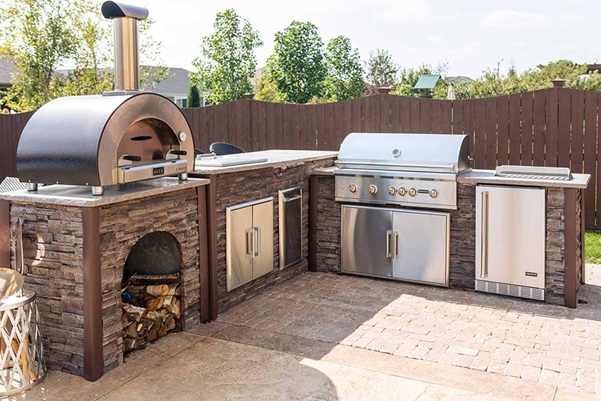
Planning an L-shaped layout sounds simple until you actually step outside and imagine using it. One corner, two runs, done. Except it never works out that neatly. Space behaves differently outdoors. Light shifts, wind sneaks in, and people gather where you did not expect them to.
A good layout feels easy. A bad one nags at you every time you cook.
Start With the Space, Not the Pinterest Board
Before materials or finishes enter the conversation, slow down and measure properly. L-shaped layouts are for giving, but only when the proportions make sense. Think about:
- How people will move around the counters
- Clear walking paths behind the cook
- Whether doors, fences, or plants might get in the way.
Outdoor kitchens work best when they fit the space, not dominate it.
Divide the L Into Practical Zones
Instead of seeing the L as one long counter, break it mentally into sections. This makes planning much easier and avoids awkward overlaps.
Helpful zoning ideas:
- Prep area close to water access
- Cooking zone slightly away from seating
- Serving space that faces guests.
When zones flow naturally, you stop thinking about the layout. That is usually the goal with outdoor kitchens.
Materials That Forgive a Little Neglect
Outdoor spaces can be more difficult than indoor ones. Rain, heat, grease, and time all leave their marks. Choose finishes that can take it.
Look for:
- Weather-resistant cabinetry
- Heat-tolerant worktops
- Easy-to-clean surfaces.
Perfection rarely lasts outdoors. Durability does.
Product Insight: A Thoughtfully Built L-Shape
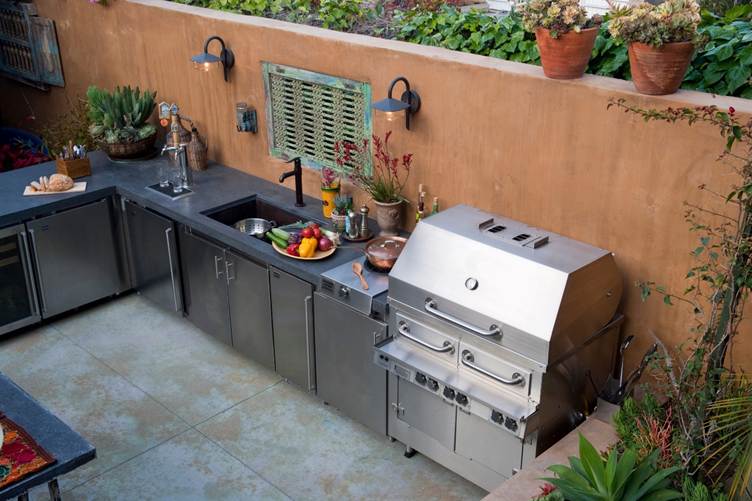
The layouts shown on the client’s web pages for Whistler Fairford outdoor kitchens highlight something refreshing. These designs feel balanced rather than bulky. The corner sections are clearly planned, not patched in as an afterthought.
What stands out is how visually appealing the space appears. Storage feels accessible. Prep areas feel calm. When featured through BBQs2u, the kitchens appear grounded in real garden settings, not overly staged environments.
How It Feels When You Actually Use It
In day-to-day use, the layout feels predictable in a good way. You know where things are. You are not constantly stepping around doors or bumping into corners. That sense of ease matters more than fancy add-ons. It is the type of kitchen that lets you focus on cooking, not managing the space. Sometimes that quiet efficiency is the real luxury.
Why Modular Layouts Make Sense Outdoors
One reason L-shapes remain popular is flexibility. With modular outdoor kitchens, you are not locked into a single, permanent setup.
Benefits include:
- Ability to expand later
- Easier repairs or upgrades
- Layouts that adapt as needs change.
Gardens evolve. Your kitchen should be able to keep up.
Making the Corner Work Harder
Corners often become dead zones, but the Whistler Fairford 90 degree cabinet shows how smart design can change that. Rather than sitting empty, the corner quietly earns its keep, linking both sides and making the kitchen feel easier to live with.
Bringing It All Together
When an L-shaped kitchen is planned properly, it settles into the garden naturally. Exploring the client’s web pages shows how these layouts work in real spaces, creating setups that feel practical, relaxed, and genuinely enjoyable outdoors.